
Serving Southwest Michigan since 1978
Turf Toe and Plantar Plate Injury Treatment in Kalamazoo, MI
Pain at the base of a toe every time you push off, or a toe that is slowly drifting out of line? Whether you jammed your big toe or your second toe is starting to cross over, these ball-of-foot injuries are treatable, right here in Kalamazoo.

When Pushing Off Hurts at the Ball of Your Foot
There are two ways these injuries usually show up. The first is sudden. You jammed or bent your big toe back too far, planting and pushing off on hard ground or turf, and now the joint at the base of the big toe is swollen, sore, and hard to push off on. That is the classic story of turf toe, and athletes know it well.
The second way is slow. The ball of your foot, usually under the second toe, has been aching for weeks or months. It is worse barefoot and worse when you push off to walk or run. Then you notice the toe itself is starting to lift up or drift toward the big toe, and it never quite sits flat anymore. That is the pattern of a plantar plate tear, and it tends to creep up rather than announce itself.
Both come down to the same kind of structure giving way: the small but strong ligament under your toe joint that keeps the toe stable and on the ground. If either story sounds like yours, you are in the right place.
Common signs of a turf toe or plantar plate injury:
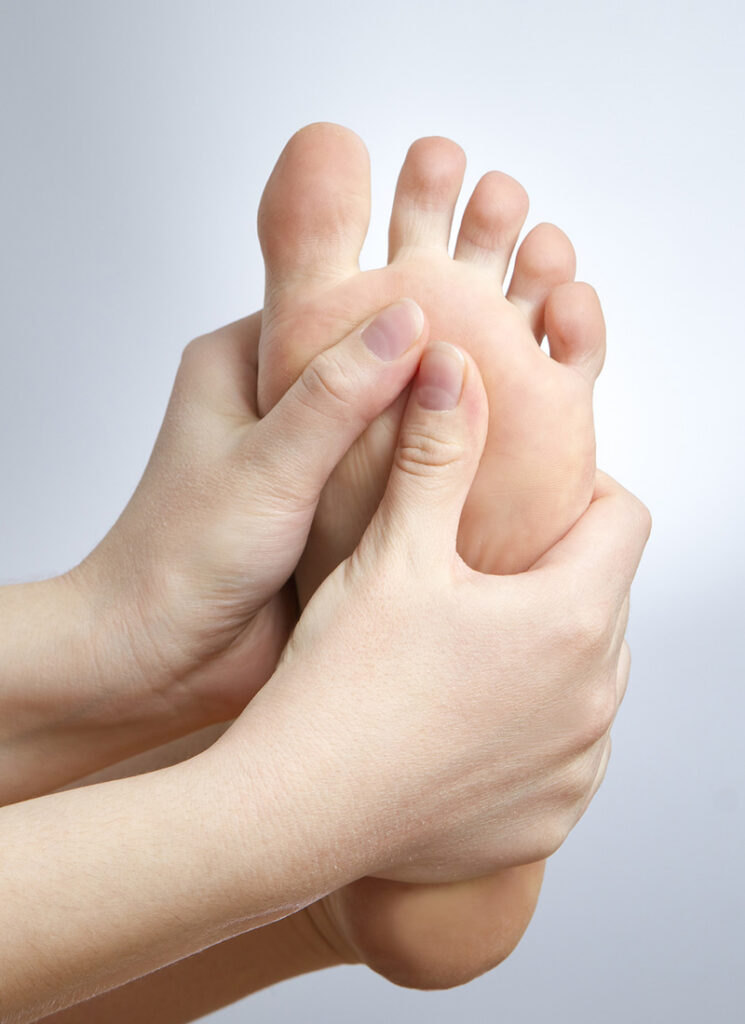
What Turf Toe and Plantar Plate Tears Actually Are
Under each toe joint, where a long foot bone meets the base of the toe bone (the proximal phalanx), is a small, tough band of tissue called the plantar plate. It is the ligament-like floor of the joint, part of the plantar capsule, and its job is to keep the toe stable and pressed flat to the ground when you push off. Strong collateral ligaments on either side help hold the joint in line. The joint itself is called the metatarsophalangeal joint, or MTP joint for short. When the plantar plate stretches, frays, or tears, the toe loses its anchor.
Turf toe is the version that happens at the big toe joint. It is a sprain or tear of the plantar plate and the surrounding structures at the base of the big toe, usually from the toe being forced to bend back too far, a hyperextension injury. Under the big toe, the plantar plate is tied in with two small bones called the sesamoid bones and the muscles and tendons around them, including the flexor hallucis brevis, the abductor hallucis, and the adductor hallucis. Together these are sometimes called the sesamoid complex, and a bad turf toe can injure them too. Like other sprains, turf toe is graded, from a mild grade 1 injury, to a partial grade 2 injury, to a full grade 3 tear. The name comes from how often it happens to athletes pushing off on hard artificial or synthetic turf.
A plantar plate tear at one of the smaller toes, most often the second toe, is usually the slow version. The plate wears and stretches over time rather than tearing in one moment. As it gives way, the toe is no longer held down and starts to lift and drift, often toward the big toe, especially if a bunion (hallux valgus) is already crowding it. Doctors sometimes call this early stage predislocation syndrome, because the toe is on its way to drifting out of joint. Left alone, it can become a crossover toe, where the toe ends up resting on top of the one next to it.
Conditions That Get Confused With a Plantar Plate Tear
Pain in the ball of the foot has several causes, and plantar plate tears get mislabeled more than most. Sorting it out matters, because the treatments are very different.
A Morton’s Neuroma
This is the most common mix-up. A neuroma is an irritated nerve, so it tends to cause burning, tingling, and numbness between the third and fourth toes. A plantar plate tear is a ligament problem, so it causes a more focal ache right under the toe joint, usually the second, often with the toe starting to drift. If you want to compare the two, see our Morton’s neuroma page.
Capsulitis
Inflammation of the joint capsule at the base of a toe. It can be the same problem at an earlier stage, before the plate has actually torn.
Metatarsalgia
This is really just a catch-all word for pain in the ball of the foot, not a diagnosis. Plantar plate tears often get bucketed under it without a clear plan, which is exactly why a precise diagnosis matters.
A Sesamoid Fracture
A break in one of the small sesamoid bones under the big toe causes pain right where turf toe hurts. X-rays help tell a sesamoid fracture apart from a soft-tissue turf toe injury. Learn about fracture care.
A physical examination that tests the toe’s stability, along with X-rays of the MTP joint and sometimes an ultrasound or MRI, sorts these out so you are treating the real problem and not the wrong one. Imaging can also catch a loose fragment of bone or cartilage in the joint, called a loose body.
You’ve Probably Already Tried…
Most people who come in for one of these injuries have already worked through some version of this list:
These help, and for a fresh turf toe or an early plantar plate problem they often help a lot. Protecting the toe and keeping it from bending too far is exactly the right first move, and many of these injuries settle with time and the right support. But once a plantar plate has actually torn and the toe has started to drift, taping and pads can hold the line but they cannot pull the toe back into place or repair the torn tissue. When the toe keeps drifting despite doing everything right, that is the signal it needs a closer look.
When to See a Foot and Ankle Specialist
A toe that is sore for a few days after you jammed it is one thing. A toe that is changing position is another. Here is when it is worth having a podiatrist or foot specialist take a look:
Treatment Options for Turf Toe and Plantar Plate Tears
We start with the least invasive care that protects the toe and only move toward surgery when the tissue is torn and the toe will not stay in place. Surgery is the last step, not the first.
Most mild turf toe sprains and many early plantar plate problems are managed without surgery:
The goal of non-surgical care is to protect the plate while it heals and keep the toe stable. For a grade 1 or grade 2 turf toe, and for a plantar plate caught early, this is often enough. When the plate is fully torn or the toe has already drifted, support can manage the symptoms but cannot restore the structure, and that is when surgery is worth discussing.
When the plate is torn through or the toe will not stay in line, surgery repairs the tissue and puts the toe back where it belongs.
Plantar plate repair. The torn plate is reattached and tightened so the toe sits flat and stable again. This is the core procedure for a significant plantar plate tear at a lesser toe.
Repair with toe realignment. When the toe has already drifted or crossed over, the plate repair is combined with a procedure to straighten the toe back into line, so it does not simply drift again after healing.
Turf toe repair. For a complete (grade 3) tear at the big toe, the torn structures at the base of the big toe are repaired directly. Most turf toe is treated without surgery, so this is reserved for the more severe injuries.
Your surgeon will explain which approach fits your toe at the consultation, based on the exam, your imaging, and how active you are.
What to Expect After Surgery
These are outpatient procedures, usually done under a regional block that numbs the foot, often with light sedation. You go home the same day. The repaired tissue has to heal before it can take a full push-off, so the early focus is on protecting it. Recovery depends on which procedure you had.
After a Plantar Plate Repair
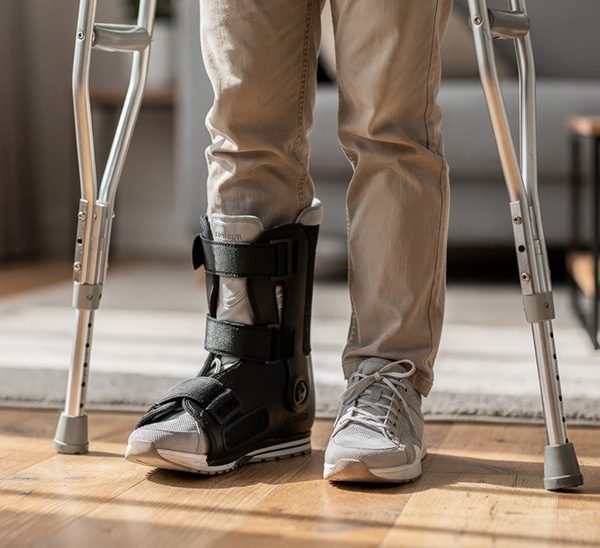
Expect to keep weight off the front of the foot, usually in a stiff-soled surgical shoe or a boot with the toe protected, for the first several weeks while the repair heals. The toe is often taped or splinted to hold its position during that time. Most people transition back into supportive shoes over the following weeks and return to fuller activity by around 8 to 12 weeks, with a gradual return to running and sport after that.
After a Turf Toe Repair
Recovery from a big toe repair follows a similar, protected path. Plan on a period in a boot keeping the big toe from bending too far, then a slow, staged return to push-off activity. Because the big toe does so much work in pushing off, the return to sprinting and cutting sports is deliberate and built around how the toe is healing.
Across Both
Keep activity light while the repair heals, then build back up as the foot allows. A gradual, guided return to sport protects the repair, since pushing off too hard too soon is the main risk to a healing plate. Your surgeon will give you a timeline built around your procedure and your sport rather than a generic estimate.
Why Patients Across Southwest Michigan Choose Kalamazoo Foot Surgery
Kalamazoo Foot Surgery is built around a simple idea: the right treatment depends on the patient, not the practice. Our five foot and ankle surgeons are each Fellows of the American College of Foot and Ankle Surgeons (FACFAS). Together, we cover the full range of foot and ankle care, from a guided rehab or conservative plan to a straightforward procedure to complex surgery. With several surgeons and modern techniques under one roof, your plan is matched to your condition and your goals, using the approaches most likely to get you back to the activities you want.
The practice has served Kalamazoo since 1978. Patients come in from across Southwest Michigan, including Portage, Battle Creek, Mattawan, Texas Township, Plainwell, Richland, Galesburg, and Paw Paw, to get a straight answer on a toe injury that other offices could not pin down, close to home.

Dr. Rick Tiller
DPM, FACFAS
Foot & ankle surgery since 1991

Dr. Andrew Robitaille
DPM, FACFAS
Forefoot & reconstructive rearfoot surgery

Dr. Douglas Brewer
DPM, FACFAS
26+ years of experience

Dr. Elizabeth Horton
DPM, FACFAS
Reconstructive surgery, trauma & sports

Dr. Jessica Patterson
DPM, FACFAS
Wound care
What Our Patients Say
Frequently Asked Questions
Schedule Your Foot Evaluation
How you move forward depends on where you are.