
Serving Southwest Michigan since 1978
Minimally Invasive Foot Surgery in Kalamazoo, MI
Modern foot surgery for bunions, hammertoes, and other foot deformities, done through small incisions instead of large ones. Faster recovery, smaller scars, fewer compromises, from five board-certified foot and ankle surgeons.

What Is Minimally Invasive Foot Surgery?
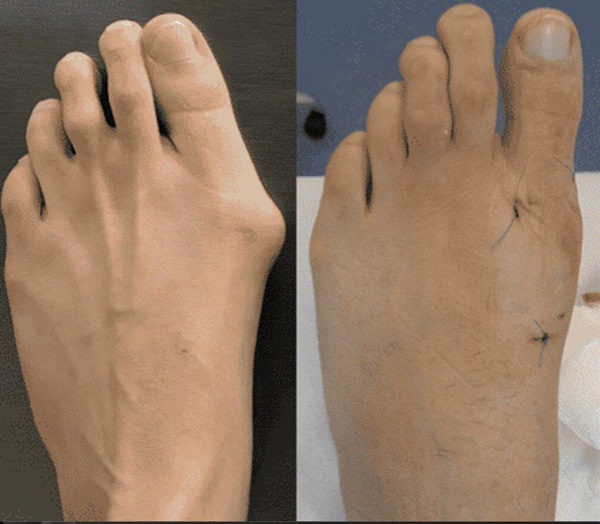
Minimally invasive foot surgery, or MIS, fixes foot problems through several tiny incisions, each just 3 to 5 millimeters wide. Traditional foot surgery uses one long incision instead.
During the procedure, your surgeon uses small tools and live X-ray imaging to guide every move. The bone is cut and shifted back into place through those small openings, and small internal screws hold it in its new position while it heals. You will not feel the screws after recovery, and they stay in place for good.
For many patients, the MIS approach means less swelling, less pain after surgery, earlier walking, and a faster return to normal shoes. That is a big change from the surgery your parents or grandparents had for the same problem. The recovery you may have heard about is not the recovery you are looking at today.
What the minimally invasive approach can mean for you:
Conditions We Treat With Minimally Invasive Surgery
Not every foot problem can be fixed with small incisions. But more and more can. These are the conditions our surgeons most often treat with minimally invasive techniques.
Bunions
A bunion is the bony bump at the base of the big toe (sometimes called hallux valgus). Modern minimally invasive bunion surgery moves the bone back into place through small incisions. Most patients walk the same day in a protective shoe, and small internal screws hold the bone while it heals.
Hammertoes
A hammertoe is a toe that bends abnormally at the middle joint. Minimally invasive correction uses small incisions to release tight tendons or move the small bones of the toe. It often combines well with bunion surgery in one session when both are on the same foot.
Tailor’s Bunions (Bunionettes)
A tailor’s bunion is the same kind of problem as a bunion, but on the outside of the foot at the base of the small toe. The bone is moved back into place through small incisions and held with small internal screws. Same approach, same benefits, same recovery.
Big Toe Arthritis
Big toe arthritis (sometimes called hallux rigidus) is a stiff, painful big toe joint from cartilage wear. In early and mid-stage cases, minimally invasive techniques can remove the bone spurs that limit motion and ease pain through small incisions, without a full joint replacement.
Combined Foot Problems
When you have a bunion and a hammertoe on the same foot, the minimally invasive approach can fix both in one surgery. That means one recovery instead of two.
Not sure if your condition qualifies? The best way to find out is a consultation with weight-bearing X-rays, taken while you stand on the foot.
How Minimally Invasive Surgery Compares to Traditional Foot Surgery
Both approaches can achieve the same fix. The right one for you depends on how bad the problem is, the surgical procedure required, and your overall health. The benefits of the minimally invasive approach come down to one thing: fixing the same foot problem with less damage to the rest of your body.
The minimally invasive approach is not better than traditional surgery for every patient. It is one of several tools. Your surgeon at Kalamazoo Foot Surgery will pick the approach that best fits your foot, your life, and your recovery goals.
You’ve Probably Already Tried…
Most patients who come in for a minimally invasive foot surgery visit have already tried some version of this list:
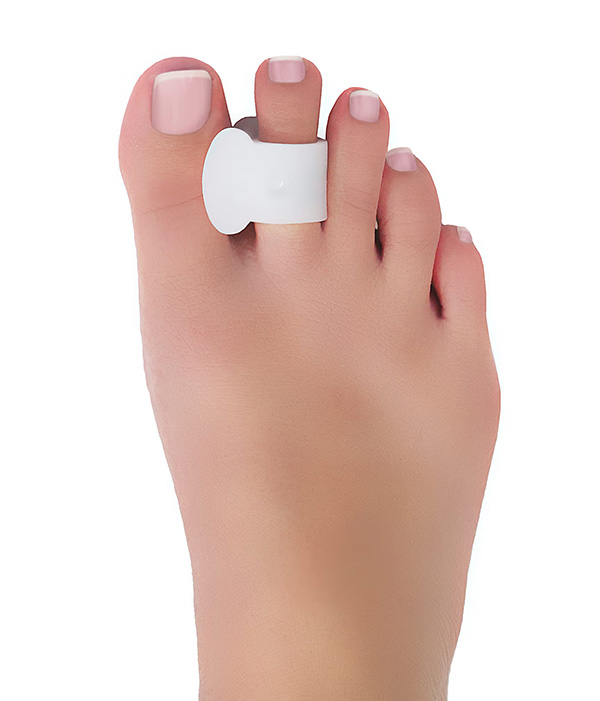
These approaches help. They are worth trying. For some patients, the right mix of non-surgical care can keep things comfortable for years. But non-surgical care cannot move bones back into place. When pain, a worsening problem, or daily limits cross a certain line, non-surgical care has done what it can.
When Surgery Is Actually the Right Next Step
No foot problem needs surgery. There is the foot that gets in the way of your life, and the foot that does not. Here are the honest signs:
If your foot only hurts in tight shoes you could swap out, it probably does not need surgery yet. If your foot hurts in the shoes you have already swapped to, or on the morning walks you used to enjoy, that is a different story. Many patients spend a year or two crossing back and forth over this line before they are ready. The point of the consultation is to figure out where you actually are, not to talk you into something.
What Recovery Actually Looks Like
The honest answer is that recovery times depend on the procedure you have and how your body heals. But here is what most minimally invasive foot surgery patients can expect.
Day of Surgery
You go home the same day. The surgery itself usually takes 30 to 90 minutes. Most patients get light sedation plus a numbing shot around the foot, so you do not have to be fully asleep. You will leave in a surgical shoe or boot, with someone to drive you home.
Week 1
The most restricted week. Keep the foot raised above heart level as much as you can to control swelling. Pain after surgery is usually managed with prescription medication for the first few days, then over-the-counter pain relievers are enough for most people. Most patients are walking in a protective surgical shoe within 24 to 48 hours.
Weeks 2 to 4
Stitches and bandaging usually come off around the two-week visit. Swelling is still there but improving, and you are still in the surgical shoe or boot. Most desk-job patients go back to work during this time. You can drive again once you are off the prescription pain medication.
Weeks 4 to 8
You move from the surgical shoe back into a wide athletic shoe. Patients with jobs on their feet, like nurses, teachers, retail, and factory work, usually return to full shifts during this stretch. Swelling keeps improving, though you will not be running yet.
Months 3 and Beyond
By month three, most patients are back in normal shoes, including dressier styles. You can usually return to running, hiking, and impact sports between months three and six. How the foot looks and works is usually settled by the one-year mark.
These ranges assume a smooth recovery. More involved surgeries take longer, including Lapiplasty for severe bunions, repeat surgery to fix a previous one, and doing both feet at once. Your surgeon will walk you through your own timeline at the consultation.
Why Patients Across Southwest Michigan Choose Kalamazoo Foot Surgery
Kalamazoo Foot Surgery is built around a simple idea: the right treatment depends on the patient, not the practice. Our five foot and ankle surgeons are each Fellows of the American College of Foot and Ankle Surgeons (FACFAS), podiatry’s highest credential in foot and ankle surgery. Together we cover the full range of foot and ankle care, from a guided rehab or conservative plan to a straightforward procedure to complex surgery.
With several surgeons and modern techniques under one roof, your plan is matched to your condition and your goals. The practice has served Kalamazoo since 1978, and patients come in from across Southwest Michigan, including Portage, Battle Creek, Mattawan, Texas Township, Plainwell, Richland, Galesburg, and Paw Paw. We are located at 1212 S Park St, Kalamazoo, MI 49001.

Dr. Rick Tiller
DPM, FACFAS
Foot & ankle surgery since 1991

Dr. Andrew Robitaille
DPM, FACFAS
Forefoot & reconstructive rearfoot surgery

Dr. Douglas Brewer
DPM, FACFAS
26+ years of experience

Dr. Elizabeth Horton
DPM, FACFAS
Reconstructive surgery, trauma & sports

Dr. Jessica Patterson
DPM, FACFAS
Wound care
What Our Patients Say
Frequently Asked Questions
Schedule Your Minimally Invasive Foot Surgery Consultation
How you move forward depends on where you are.