
Serving Southwest Michigan since 1978
Chronic Ankle Instability Treatment in Kalamazoo, MI
Non-surgical care first, then surgery to rebuild the ligaments when your ankle keeps giving out. Modern treatment for repeated ankle sprains and the weak ankle that never fully recovered, right here in Kalamazoo.

When Your Ankle Keeps Giving Out
If you have rolled the same ankle so many times you have lost count, you are not clumsy and you do not have bad luck. You most likely have a structural problem that recurrent ankle sprains have left behind. The ligaments that are supposed to hold the ankle steady have stretched out, and once that happens the ankle keeps turning on you.
Most people with this problem describe the same thing: the first bad sprain happened a while ago, it seemed to heal, and the ankle has never felt right since. Now it gives out on curbs, on stairs, on uneven ground, or for no clear reason at all. Many have started avoiding trails, sports, or even walking on grass because they do not trust the ankle to hold.
Common signs of chronic ankle instability:

What Is Chronic Ankle Instability?
Chronic ankle instability (your doctor may abbreviate it CAI) is a chronic condition where the ligaments on the outside of your ankle have been stretched or torn by repeated sprains and no longer hold the joint tightly. The two main ones are the anterior talofibular ligament (ATFL) and the calcaneofibular ligament (CFL). Ligaments are the strong bands of tissue that connect bone to bone and keep the ankle from rolling too far. When you sprain your ankle, you stretch or tear them, most often in these lateral ankle sprains on the outer side. When that happens over and over, they heal loose and long instead of tight and short.
A loose ligament cannot do its job. The ankle has less to stop it from rolling, so it rolls more easily, which sprains it again, which stretches the ligament further. That is the cycle, and it is why repeated sprains tend to get worse rather than better on their own. Your doctor may call this lateral ankle instability, because it usually involves the ligaments on the outer (lateral) side of the ankle. The ligaments being physically loose is called mechanical instability.
There is also a part of this you cannot feel directly. Each sprain dulls the ankle’s sense of its own position (its proprioception), the feedback that normally tells your body to correct before you roll. Doctors call that loss functional instability, and it is part of why the ankle keeps catching you off guard. It is also why retraining that sense, called proprioceptive training, is the first line of treatment. By the time many people seek care, they also have lingering or chronic pain on the outside of the ankle.
Conditions That Get Confused With Ankle Instability
A loose ankle is not the only reason an ankle keeps hurting after a sprain. A few problems look similar and sometimes happen alongside instability.
A Peroneal Tendon Injury
Two tendons run along the outside of the ankle and help hold it steady. A tear or slipping of these tendons causes outer-ankle pain and giving-way that can feel just like ligament instability.
A Cartilage or Bone Injury Inside the Joint
A bad sprain can chip or bruise the cartilage and bone inside the ankle (your doctor may call this an osteochondral lesion). This causes deep ankle pain, catching, and swelling that a simple sprain should not.
Sinus Tarsi Syndrome
Pain and a feeling of instability on the outside of the ankle, just in front of the ankle bone, that lingers after a sprain.
Sorting these out matters because they need different treatment. A hands-on exam (including a simple move called the anterior drawer test that checks how far the ankle shifts forward), X-rays, and sometimes an MRI tell us whether the problem is loose ligaments, an injured tendon, damage inside the joint, or more than one of these at once.
You’ve Probably Already Tried…
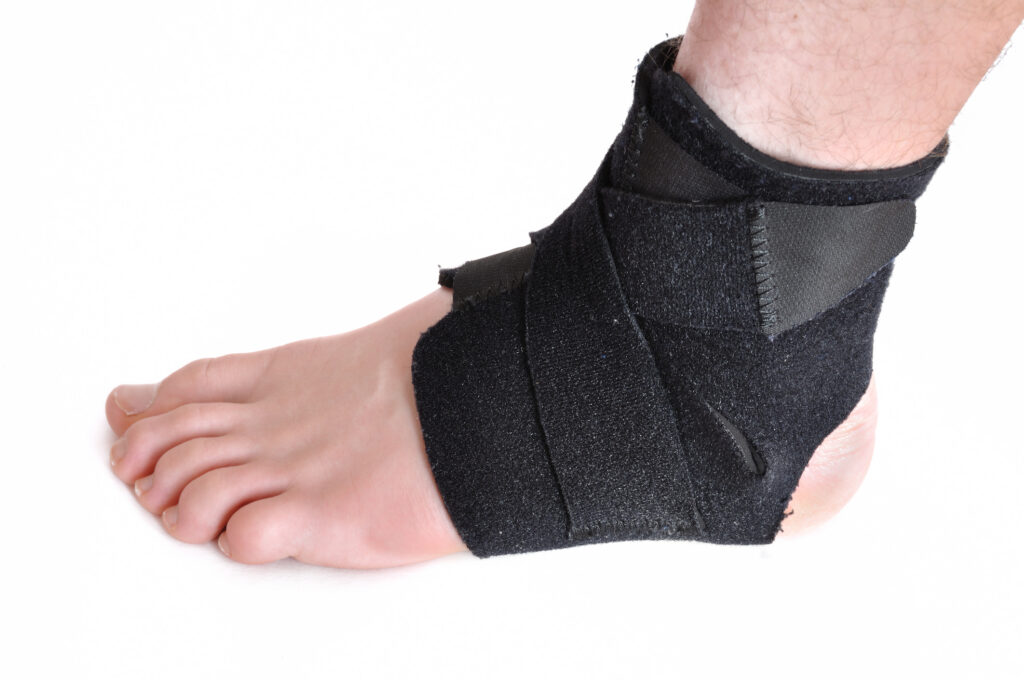
Most people who end up discussing surgery for an unstable ankle have already worked through some version of this list:
These conservative treatments are the right place to start, and for many people they work. A good rehab program that rebuilds strength and retrains the ankle’s sense of position is enough to stop the cycle in a large share of patients. But rehab cannot tighten a ligament that has already stretched out. When the ankle keeps giving out despite months of bracing and therapy, that is the sign the problem is structural, and structure is something only surgery can change.
When to See a Foot and Ankle Specialist
Not every sprain needs a specialist. A single sprain that heals with rest and rehab is just a sprain. But here is when repeated ankle problems are worth a closer look:
Treatment Options for Chronic Ankle Instability
We start with non-surgical care for nearly everyone and only move to surgery when the ankle keeps giving out despite a fair trial of bracing and rehab. Surgery is the last step, not the first.
For many people, the right rehab program ends the cycle:
The goal of non-surgical care is to make the muscles around the ankle do more of the work the loose ligaments can no longer do. When the ligaments are only mildly stretched, this is often enough. When they are badly stretched or torn, the ankle keeps giving out no matter how strong the muscles get, and that is when surgery is worth discussing.
When the ligaments will no longer hold, surgery tightens or rebuilds them so the ankle is stable again. The right approach depends on how stretched the ligaments are and how active you are.
Ligament repair (the Brostrom procedure). The most common operation for an unstable ankle. The surgeon tightens your own stretched-out ligaments and re-anchors them snugly to the bone. For most patients this restores a stable ankle using the tissue you already have.
Repair with added reinforcement (sometimes called an internal brace). A strong tape-like material is placed alongside the repaired ligament to protect it while it heals and to add long-term strength. This reinforcement often allows a faster, more confident return to activity and is a good fit for athletes and heavier or very active patients.
Ankle arthroscopy at the same time. A small camera is placed in the joint through tiny incisions to find and clean up cartilage damage, loose fragments, or scar tissue left behind by old sprains. This is often combined with the ligament repair so both problems are handled in one surgery.
Reconstruction with a tendon graft. For ankles that have been unstable for a long time, or where the original ligaments are too damaged to repair, the surgeon rebuilds the ligament using a tendon graft. This is a larger operation reserved for the more severe cases.
Your surgeon will explain which approach fits your ankle at the consultation, based on the exam, your imaging, and how you want to use the ankle.
What to Expect After Ankle Stabilization Surgery
Most ankle stabilization surgery is done as an outpatient procedure under general anesthesia or a regional nerve block. You go home the same day. Recovery depends on which procedure you had, and the timelines below are typical rather than exact.
After a Brostrom Ligament Repair
Expect a splint or boot and limited weight on the ankle for roughly the first 2 weeks, then a walking boot for several more weeks as the repair settles. Physical therapy usually starts within the first month or two to restore range of motion and rebuild strength. Most patients are walking comfortably in normal shoes by around 2 to 3 months. When the repair includes the added reinforcement, the early stages often move a little faster because the repair is protected.
After a Larger Reconstruction
A reconstruction using a tendon graft follows the same general path with a more protected, slower timeline. There is more healing to respect, so the boot stays on longer and the return to full activity is later.
Getting Back to Sport
The milestone most patients ask about. Light activity and running typically return around the 3 to 4 month mark, with a full return to cutting, pivoting, and competitive sport usually by 4 to 6 months, sometimes sooner with the reinforced repair. Rushing back before the ligament is ready is the main cause of re-injury, so the return is built around testing the ankle’s strength and stability, not just the calendar.
Why Patients Across Southwest Michigan Choose Kalamazoo Foot Surgery
Kalamazoo Foot Surgery is built around a simple idea: the right treatment depends on the patient, not the practice. Our five foot and ankle surgeons are each Fellows of the American College of Foot and Ankle Surgeons (FACFAS). Together, we cover the full range of foot and ankle care, from a guided rehab or conservative plan to a straightforward procedure to complex surgery. With several surgeons and modern techniques under one roof, your plan is matched to your condition and your goals, using the approaches most likely to get you back to the activities you want.
The practice has served Kalamazoo since 1978. Active patients drive in from across Southwest Michigan, including Portage, Battle Creek, Mattawan, Texas Township, Plainwell, Richland, Galesburg, and Paw Paw, to get an ankle they can finally trust again, close to home.

Dr. Rick Tiller
DPM, FACFAS
Foot & ankle surgery since 1991

Dr. Andrew Robitaille
DPM, FACFAS
Forefoot & reconstructive rearfoot surgery

Dr. Douglas Brewer
DPM, FACFAS
26+ years of experience

Dr. Elizabeth Horton
DPM, FACFAS
Reconstructive surgery, trauma & sports

Dr. Jessica Patterson
DPM, FACFAS
Wound care
What Our Patients Say
Frequently Asked Questions
Schedule Your Ankle Evaluation
How you move forward depends on where you are.